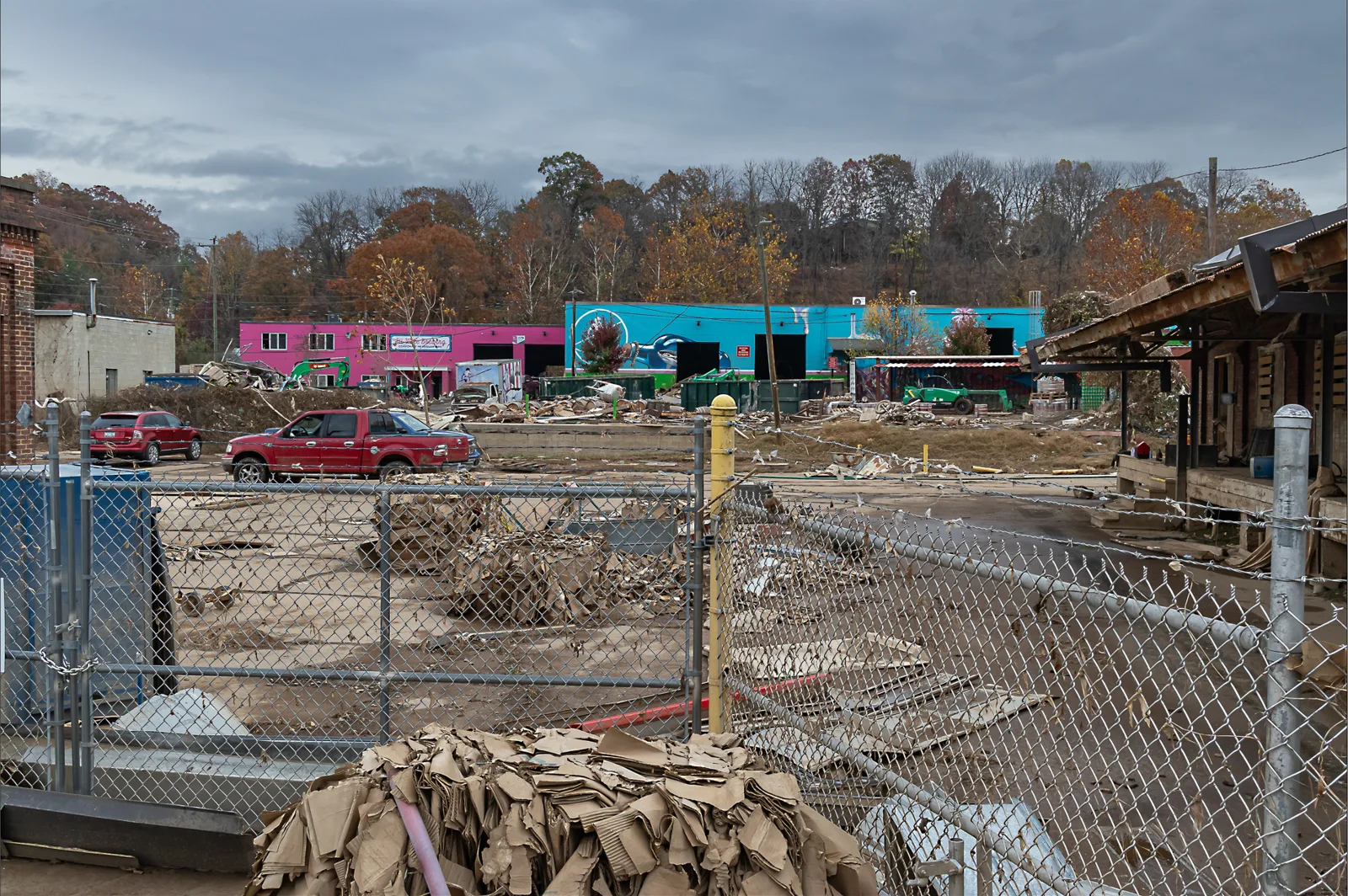
The city's new recovery report counts $47 million back from FEMA, debris cleared at 970 private properties and 27 of 31 Helene projects underway.
The city of Asheville has been reimbursed $47 million through FEMA’s Public Assistance program for its Helene response. The figure is in the first annual report of the city’s new Office of Recovery and Resilience, which the city published Monday.
The FY26 annual report covers July 1, 2025, to June 30, 2026. It also says 27 of the city’s 31 Helene recovery projects were active and the other four were in development.
What the recovery numbers show
The report’s recovery snapshot lists:
- $47 million reimbursed through FEMA Public Assistance
- 927,855 cubic yards of debris collected from rights of way, waterways, and mud and soil
- 6,500 tons of debris removed from the North Fork watershed
- debris removed at 970 private properties
- two single-family homes rebuilt
- 2 acres kept as green space
The 31 projects are the city’s share of the Buncombe County Helene Recovery Plan. The city’s release gives the 27 active and four in development.
The report says the city used recommendations from the Urban Land Institute’s Helene recovery report in 19 of those projects. It has also added a climate scoring rubric to its project planning template and to the infrastructure program funded by Community Development Block Grant Disaster Recovery money.
A new office, built from the old one
The Office of Recovery and Resilience began July 1. It replaced the city’s Sustainability Department, whose work now sits in the office’s Resilience Division.
“What began in 2008 with one full time employee as a part of the City Manager’s Office will now grow to its own Office of five full time employees,” Director Bridget Herring wrote in the report. The office plans to hire two more people.
Carbon and solar
City operations produced 17,129 metric tons of carbon dioxide equivalent in the year, the report says. That is 38.5% below the 2009 baseline.
The report says that keeps the city on track for a 2% annual cut. It adds that more resources will be needed to reach its 4% goal, and the city release says the goal of an 80% cut by 2030 will need further steps.
City solar panels produced about 548 megawatt-hours, the report says. That is about 2.5% of the city’s electricity use, or enough to power about 95 homes for a year. Counting renewable power on the Duke Energy Progress grid, about 14% of the energy used in city buildings was renewable. The report puts the year’s avoided energy costs at $65,400.
What comes next
The report lists these projects for the current fiscal year:
- a funding round for resilience hub infrastructure
- the Urban Forest Master Plan
- solar panels on the Municipal Building, which already has a new white roof after Helene damaged the old one
- the start of a multi-year rewrite of the Living Asheville Comprehensive Plan and the city’s development rules
- final designs for the riverfront parks recovery
- the end of debris removal
What it means for you
The report says the city expects to finish debris removal this fiscal year, which ends June 30, 2027.
If you want to help in the next emergency, the Asheville Fire Department has started a Community Emergency Response Team program. The report says 112 residents had registered, with in-person training after an online course.
The city sends a quarterly newsletter from the Office of Recovery and Resilience page and recovery updates through Asheville Recovers. For storm readiness at home, see our guide to power outages in Asheville. Planning to rebuild or repair? Start with our page on building permits and zoning.
Have your say